Smart thermostat boiler compatibility is mostly about what your boiler can accept, not which app looks nicest. Before you buy Hive, Nest, tado or Drayton, check the boiler type, existing programmer, wiring, hot-water control and whether you want basic on/off control or modulation.
In This Article
- Compatibility Checks Before You Buy
- Identify Your Heating System
- Relay vs OpenTherm vs Proprietary Controls
- Brand-Specific Compatibility Notes
- Wiring, Power and Installation Costs
- Hot Water, Zones and TRVs
- What to Check Before Installation Day
- Frequently Asked Questions
Compatibility Checks Before You Buy
The quick version: most UK gas boilers can work with a smart thermostat in some form, but not always in the best form. A combi boiler with a simple wired room thermostat is usually the easiest job. A heat-only boiler with a separate hot-water cylinder, two heating zones and an old programmer can get messy.
Use these smart thermostat boiler compatibility checks before you spend £150-£250 on hardware:
- Boiler type: combi, system boiler, heat-only boiler, electric boiler, heat pump or communal heating.
- Current controls: wired thermostat, wireless thermostat, programmer, timer, receiver, smart TRVs or multi-zone controller.
- Control method: simple relay on/off, OpenTherm modulation, eBUS or manufacturer-specific controls.
- Hot water: whether the thermostat also needs to control a cylinder schedule.
- Installer route: DIY receiver swap, electrician, heating engineer or brand installation.
Do not skip the boring checks. A smart thermostat that can only turn the boiler on and off may still be useful, but it is not the same as a fully compatible modulating setup. The difference affects comfort, cycling, and sometimes running cost.
Identify Your Heating System
Start with the heating system, because this decides the rest of the job.
Combi boiler
A combi boiler heats radiators and hot water directly, without a separate cylinder. This is the easiest smart thermostat scenario in many UK homes. If your existing wall thermostat simply calls for heat, Hive, Nest, tado and Drayton Wiser can usually be fitted using a receiver wired into the boiler or existing wiring centre.
The catch is modulation. Some combis support OpenTherm or brand-specific load compensation. Others only expose a basic call-for-heat terminal. If you only connect relay on/off, the smart thermostat can still schedule, geofence and learn habits, but the boiler may not reduce flow temperature as intelligently.
If you care about efficiency, check the boiler manual before buying. Search the exact boiler model plus “OpenTherm”, “eBUS”, “EMS”, “load compensation” or “weather compensation”. Do this before reading thermostat reviews.
System boiler with hot-water cylinder
A system boiler usually works with a hot-water cylinder. The thermostat may need to control heating only, while a separate programmer handles hot water, or you may want one smart system to handle both.
This is where compatibility gets more specific. Some kits include hot-water control; others need an extra receiver or programmer replacement. The tado Wireless Smart Thermostat X Starter Kit with programmer and hot-water control is around £199 direct from tado at the moment, while simpler thermostat-only kits can be cheaper.
If you have a cylinder, photograph the current programmer and wiring centre. A five-minute look now can save a wasted install visit.
Heat-only boiler
Heat-only boilers are common in older UK homes with tanks or cylinders. They can work with smart thermostats, but the install often involves a wiring centre, motorised valves and separate hot-water control.
This is rarely the best DIY job unless you already understand S-plan and Y-plan wiring. Budget for a heating engineer or electrician. A professional install is often £80-£150 for a simple swap and £150-£300 if the wiring centre needs tidying or the system has zones.
Electric heating, heat pumps and communal systems
Electric panel heaters, underfloor heating, heat pumps and communal heating need extra care. A normal gas-boiler thermostat kit may not be suitable. Heat pumps especially should not be treated like old on/off boilers; they prefer steady low-temperature operation and controls that understand the system.
If you have a heat pump, start with the manufacturer or installer. The smart home ecosystem matters less than preserving the heating design.
Relay vs OpenTherm vs Proprietary Controls
This is the technical bit that decides whether “compatible” means good or merely functional.
Relay control
Relay control is basic on/off switching. The thermostat asks for heat, the boiler fires. The room reaches temperature, the thermostat stops asking, and the boiler turns off.
Relay is widely compatible and often enough for normal households. Hive Thermostat for Heating usually costs about £179 without installation or around £279 with installation, and relay-style control is part of why it fits so many UK boilers.
The downside is cycling. The boiler may fire at a higher output than needed, then stop, then fire again. A decent thermostat can reduce this with smarter timing, but it cannot make an old boiler modulate if the wiring does not support it.
OpenTherm
OpenTherm lets the thermostat and boiler communicate more intelligently. Instead of just “on” or “off”, the thermostat can ask the boiler for a lower or higher flow temperature. That can improve comfort and reduce waste, especially in milder weather.
Not every boiler supports it, and not every thermostat kit sold in the UK uses it in the way buyers expect. Google’s official Nest thermostat compatibility guidance is worth reading before buying because it explains that system type, voltage and existing controls matter.
Nest Learning Thermostat kits are commonly around £219 at UK retailers before installation. If you want OpenTherm, check both the boiler and the exact Nest/tado/Drayton kit, not just the brand name.
Proprietary boiler controls
Some boiler makers use their own communication systems. Worcester Bosch, Vaillant, Viessmann and others have brand-specific control options. A third-party smart thermostat may still work via relay, but you may lose modulation, diagnostics or weather-compensation features from the boiler’s own controls.
That does not automatically make third-party controls wrong. It just changes the trade-off. You might prefer the smart home integration from Nest or tado, while another household gets better heating performance from the boiler manufacturer’s own controller.
Brand-Specific Compatibility Notes
This is not a full best smart thermostat guide. It is the compatibility angle only.
Hive
Hive is the least fussy option for many UK gas boiler installs. It is common, installers know it, and the receiver model makes sense when replacing an older programmer or thermostat. Expect about £179 for the thermostat without installation, or about £279 with installation direct from Hive, with offers sometimes lower.
The trade-off is that Hive is usually chosen for easy control rather than deep boiler modulation. If your boiler supports OpenTherm and you specifically want that, check carefully before assuming Hive is the best match.
Hive suits: uncomplicated combi setups, households wanting app control, and people who value simple support over advanced heating tuning.
Google Nest
Nest suits people who want polished automation, learning schedules and a thermostat that looks less like a utility-room accessory. It can work well in UK homes, but the Heat Link receiver and wiring requirements mean you should check compatibility before buying.
Expect around £219 for the Nest Learning Thermostat hardware from Currys, Amazon UK or Screwfix when in stock, plus installation if you are not comfortable with the receiver wiring. Installation often adds £90-£150.
Nest suits: combi and conventional boiler setups where the Heat Link can be fitted cleanly, and homes already using Google smart speakers or displays. If you are building out the rest of the house, our smart home ecosystems guide is the better next read.
tado
tado is often the strongest choice for people who care about radiator control and compatibility detail. The product range can be confusing because there are wired, wireless and newer X versions, plus smart radiator thermostats.
tado’s own Wireless Smart Thermostat X kit page is useful because it clearly mentions hot-water control and OpenTherm in the product scope. Current UK pricing is roughly £199 for that wireless starter kit, with smart radiator thermostats often around £69-£79 each.
tado suits: homes where room-by-room control matters, households with mixed occupancy, and buyers willing to check the exact kit rather than just buying the cheapest thermostat.
Drayton Wiser
Drayton Wiser is strong for UK-style heating zones and radiator valves. Starter kits are often around £130-£200 depending on whether you need one, two or three channels. Radiator thermostats are commonly around £45-£60 each, making multi-room control cheaper than some rivals.
It is a practical choice if your home already has separate heating/hot-water channels or you want TRVs without spending tado money in every room.
Drayton suits: conventional UK systems, zoned homes, and people who want a heating-first system rather than a wider smart home brand.
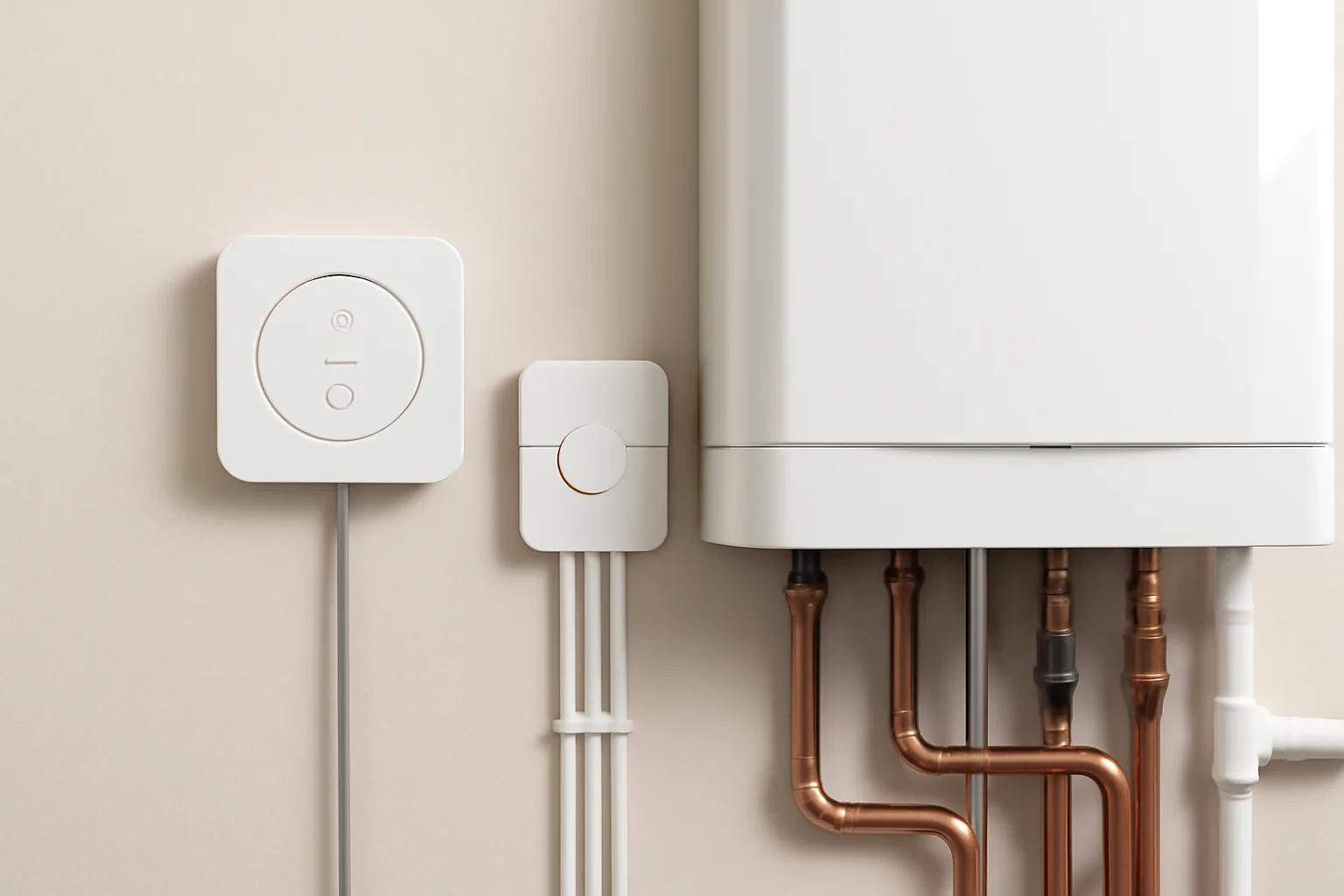
Wiring, Power and Installation Costs
The thermostat on the wall is the visible bit. The receiver near the boiler is the part that decides whether the install is simple or irritating.
Wired thermostat replacement
If your current wall thermostat has suitable low-voltage wiring, a wired smart thermostat may replace it directly. That can look neat and avoid battery worries. It is not guaranteed, because old thermostats may have mains switching, missing neutral wires or odd legacy wiring.
Do not assume wire colours mean anything. Older UK heating wiring can be creative. Photograph the terminals before disconnecting anything, and if you are not sure, pay for installation.
Wireless receiver installs
Many systems use a wireless thermostat with a receiver wired near the boiler or programmer. The room thermostat talks wirelessly to the receiver; the receiver switches the heating.
This is common with Hive, Nest Heat Link, tado wireless kits and Drayton Wiser. It is also where many compatibility mistakes happen. Buyers check the thermostat display, but not whether the receiver can replace the existing programmer and handle hot water.
Cost to install
For a normal combi boiler, expect:
- DIY hardware only: £120-£220 depending on brand and offers.
- Brand installation: often about £90-£120 on top of hardware.
- Local electrician or heating engineer: about £80-£150 for a simple job.
- Complex wiring centre or zones: about £150-£300 if the system needs investigation or rework.
If the install quote is more than the thermostat, ask why. Sometimes the reason is fair: no neutral, old programmer wiring, two-channel hot water, or a messy wiring centre. Sometimes you are being quoted for uncertainty.
Hot Water, Zones and TRVs
The easy smart thermostat boiler compatibility checks cover single-zone heating. Real homes are often less tidy.
Hot-water cylinders
If you have a hot-water cylinder, decide whether smart hot-water scheduling matters. Some households leave hot water on a simple timer and only smart-control the heating. Others want one app for both.
Do not buy a heating-only kit if replacing the programmer would remove hot-water control. That is the classic cylinder-house mistake.
Two heating zones
Larger homes may have upstairs and downstairs zones, each with its own thermostat or motorised valve. One smart thermostat will not magically control both zones unless the system is designed for it.
You may need a multi-channel kit, two thermostats, extra receivers, or a full wiring centre review. This is where Drayton Wiser and tado can make more sense than a single fashionable thermostat.
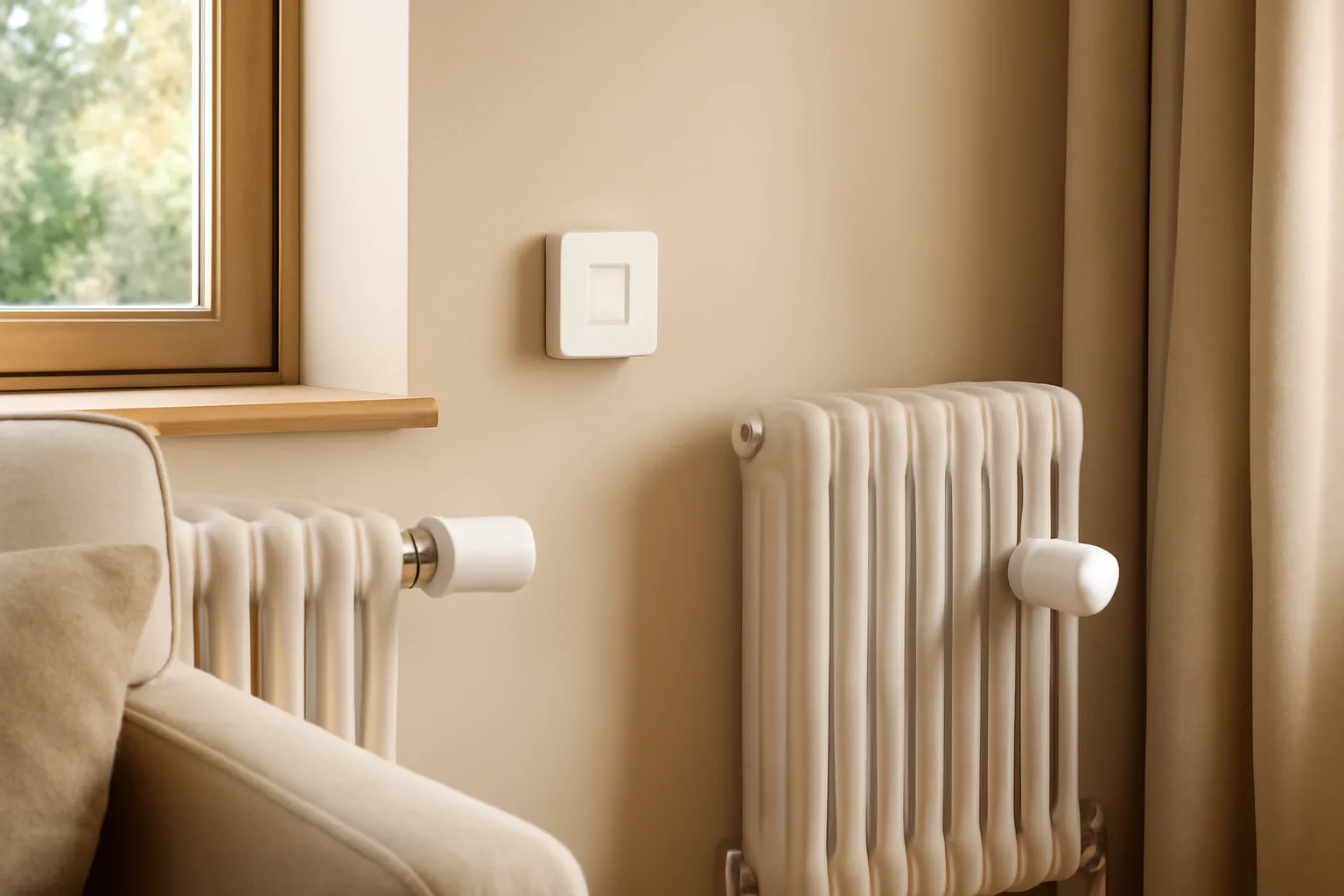
Smart radiator valves
Smart radiator valves are useful when rooms behave differently. A home office may need heat during the day; bedrooms may not. Expect to pay about £45-£80 per valve depending on brand.
Do not fit smart TRVs everywhere on day one. Start with the rooms that cause the problem: cold office, overheated spare room, child’s bedroom, or a lounge that warms slowly. For energy tracking around the rest of the home, our smart home energy monitoring guide is a better companion than buying extra valves blindly.
Existing smart home kit
If you already use Alexa, Google Home or Apple Home, compatibility with routines may matter. Heating should not be fully dependent on voice assistants, though. The heating still needs to work when the Wi-Fi drops, the app logs out, or a cloud service has a bad day.
That is why I prefer heating controls with a usable physical thermostat or local schedule, not app-only control. Smart plugs and routines are fine for lamps; boilers deserve a lower tolerance for nonsense. If you are trying to control plug-in appliances rather than a boiler, our smart plugs guide is the safer place to start. For lighter automation jobs, see our guide to setting up home automation without a hub.
What to Check Before Installation Day
Do this before the thermostat arrives, not while an installer is standing in the hallway.
- Find the exact boiler model. Open the flap or check the manual. Photograph the model plate if it is readable.
- Photograph existing controls. Capture the thermostat, programmer, receiver, wiring centre and any hot-water controls.
- Check for hot-water control. If you have a cylinder, make sure the new kit supports the channel you need.
- Check modulation support. Look for OpenTherm, eBUS or the boiler maker’s own control language.
- Decide who is installing it. DIY is fine only if the system is simple and you understand the wiring.
- Keep the old controller until the new one works. Do not throw away the fallback on day one.
After installation, test heating call, schedule, manual override and hot water if relevant. Then check the boiler fires and stops as expected. Do this before the installer leaves.
If you are new to smart home kit generally, start with our best smart home devices for beginners guide before linking heating to every routine in the house.
For a simple combi boiler, Hive, Nest, tado and Drayton Wiser are all possible, but the best choice depends on whether you want easy app control, OpenTherm modulation, radiator zoning or hot-water control.
For a system or heat-only boiler with a cylinder, check hot-water channels and wiring before buying. The wrong kit can still look compatible on the box and fail the real installation.
For heat pumps, electric heating and communal heating, do not guess. Use the heating manufacturer or installer as the starting point.
My practical rule: if you only want app schedules, buy the reliable kit your installer knows. If you want efficiency tuning, start with the boiler manual and control protocol. Smart thermostat boiler compatibility checks beat brand loyalty every time.
Frequently Asked Questions
Will any smart thermostat work with my boiler? No. Many UK boilers can use a smart thermostat through relay control, but hot-water cylinders, zones, heat pumps and proprietary controls can limit your options.
What is OpenTherm and do I need it? OpenTherm lets the thermostat tell the boiler how hard to work rather than just switching it on and off. You do not always need it, but it can improve comfort and efficiency if both boiler and thermostat support it.
Can I install a smart thermostat myself? Sometimes, but only on simple systems where you understand the wiring. If there is mains wiring, a programmer, hot-water control or a wiring centre, use a qualified installer.
Which smart thermostat is best for a combi boiler? Hive is often the easiest mainstream option, Nest is strong for Google homes, tado is good for OpenTherm and radiator control, and Drayton Wiser is practical for UK heating zones.
Do smart thermostats work without Wi-Fi? Basic heating control should still work locally on most proper thermostat systems, but app control, geofencing and remote scheduling need Wi-Fi and cloud access.
How much does smart thermostat installation cost in the UK? A simple install is often £80-£150. Brand installation is commonly around £90-£120 on top of the thermostat. Complex zoned or hot-water systems can cost £150-£300.