Smart blinds and curtains are worth considering when the window is awkward, the room overheats, or you want privacy to happen automatically rather than relying on everyone remembering at dusk. They are not magic, though: the real decision is whether to retrofit a motor to what you own, buy a made-to-measure electric blind, or fit a curtain motor that can handle the weight of your fabric.
In This Article
- Smart Blinds and Curtains: The Practical Decision
- How Motorised Window Coverings Work
- Blinds vs Curtains vs Retrofit Motors
- Power, Charging and Wiring Choices
- Controls, Routines and Smart Home Compatibility
- Safety, Privacy and UK Homes
- What to Buy in the UK
- Frequently Asked Questions
Smart Blinds and Curtains: The Practical Decision
Motorised smart blinds and curtains make most sense when automation solves a real irritation. A high stairwell blind, a south-facing home office, a bedroom blackout blind, or a wide patio-door curtain can all justify the cost. A small kitchen roller blind beside the sink probably cannot, unless you love gadgets more than money.
The biggest benefit is consistency. Blinds close when the sun hits the TV. Bedroom curtains open gradually on school mornings. Street-facing rooms get privacy before the lights go on. In summer, blinds can drop before the room turns into a greenhouse; in winter, curtains can close before heat disappears through old glazing.
The honest downside is cost. A manual roller blind from Dunelm or Blinds2go might be £20-£60. A basic electric made-to-measure blind can start around £26.28 from Blinds2go’s SmartView electric roller range, but the price climbs quickly with size, fabric and extras. A retrofit motor such as the Aqara Roller Shade Driver E1 is about £52.57 on Amazon UK, and it still needs a compatible beaded chain blind and usually an Aqara hub. A curtain motor such as the SwitchBot Curtain 3 is £69.99 direct from SwitchBot UK, before you add a hub, remote or solar panel.
My rule is simple: motorise the windows you touch every day, not every window in the house. One good bedroom or lounge setup is more useful than six cheap motors that need constant charging and recalibration.
How Motorised Window Coverings Work
Motorised window coverings replace your hand movement with a small motor. The motor turns a roller tube, pulls a beaded chain, moves a curtain along a rail, or drives a track built into a made-to-measure system.
The motor position
Roller blinds usually hide the motor inside the tube or use an external chain driver fixed to the wall. Roman blinds and Venetian blinds often need a made-to-measure motorised headrail. Curtains use either a motorised track or a robot-style device that clips onto a pole or rail and pushes the curtain carrier.
Retrofit devices are cheaper because they keep your existing blind or curtain. They are also fussier. The chain must fit the adapter, the bracket must sit straight, and the blind must already move smoothly. If a manual blind sticks halfway down, adding a motor will not make it graceful.
Hubs and radios
Smart blind motors use Zigbee, Thread, Bluetooth, Wi-Fi or a brand-specific bridge. Battery devices often avoid Wi-Fi because it uses more power. Zigbee and Thread are common because they are low-power and reliable over short distances.
If you already use smart lighting, keep the same ecosystem where possible. A home with Zigbee smart lighting may suit Aqara or IKEA-style blinds. A SwitchBot home may suit Curtain 3 and the SwitchBot Hub 2. A Home Assistant setup can handle more mixed kit, but you will spend more time maintaining it. If you are trying to keep the setup simple, compare this with setting up home automation without a hub before buying another bridge.
Calibration
Every motor needs to know its open and closed limits. Good systems make this a two-minute app setup. Poor setups drift, stop short, or keep tugging against the end of the blind. That is where cheap no-name motors become annoying. If the product reviews mention recalibration every few weeks, believe them.
Blinds vs Curtains vs Retrofit Motors
The right route depends on what is already fitted and how much disruption you can tolerate.
Made-to-measure electric blinds
Made-to-measure electric blinds are the neatest option. The motor is designed into the blind, the fabric fits the window, and the remote or app is supported by the seller. Blinds2go, Hillarys, Swift Direct Blinds and specialist local blind companies all offer electric options in the UK.
Costs vary wildly. A small electric roller blind might land under £80 if you catch a discount. A large blackout or thermal blind can be £150-£350. A professionally measured and fitted set from a local supplier or Hillarys-style service can be several hundred pounds per window once fabric, motor and installation are included.
The main advantage is neatness. The main disadvantage is commitment. If you measure badly or later change the room layout, you cannot move the blind to another window.
Retrofit roller-blind motors
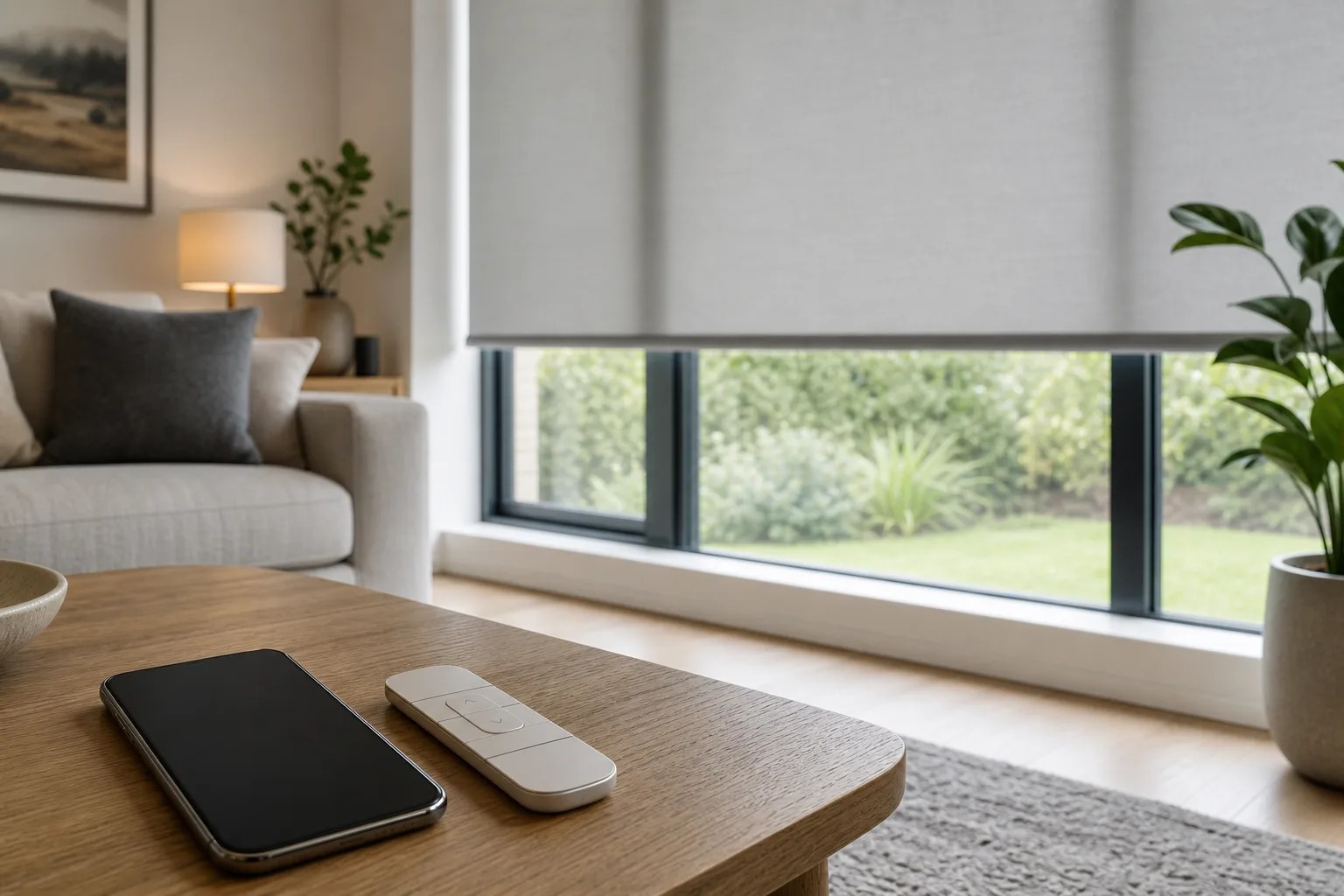
A retrofit chain driver is the cheapest way to try automation. The Aqara E1 sits beside the blind and pulls the existing beaded chain. It is a clever little device when the chain is compatible, and it avoids replacing the blind.
It is not invisible. You see the motor on the wall, and it needs charging through USB-C. Based on owner feedback, it suits regular roller blinds better than heavy or stiff blinds. If the window is prominent in a lounge, a made-to-measure motor hidden in the tube looks cleaner.
Curtain motors
Curtain motors are useful for wide patio doors, bay windows and heavy bedroom curtains. SwitchBot Curtain 3 claims support for curtains up to 15kg, which is enough for many UK rooms, but tracks and poles matter. Extendable rods, sticky gliders and very heavy lined curtains can defeat the motor or make it noisy.
If you own the house and are redecorating, a proper motorised curtain track is the better long-term choice. If you rent or want a low-disruption trial, a clip-on motor is easier to justify.
Power, Charging and Wiring Choices
Power is the bit people underestimate. The nicest automation routine becomes irritating if you need a stepladder and a USB cable every few weeks.
Battery motors
Battery motors are easiest to fit. You charge them by USB-C, micro-USB or a removable battery pack, then forget about them for a while. Battery life depends on fabric weight, window size, signal strength and how often the blind moves.
For a bedroom blind that opens once and closes once per day, several months between charges is realistic with decent kit. For a large patio-door curtain that moves four times a day, expect more frequent charging. A solar trickle panel can help if the window gets good daylight, but do not rely on it in a north-facing UK room.
Mains-powered motors
Mains power is better for big windows, heavy curtains and whole-room schemes. It is also messier. You may need an electrician, especially if the motor is hidden near the headrail or connected to a fused spur.
Budget properly. A hardwired blind motor might add £80-£200 per window over a manual blind, and electrical work can cost another £100-£300 depending on access. If you are already renovating, this is the time to do it. Retrofitting after decorating is more painful.
Charging access
Before buying, stand where the motor will live and ask how you will charge it. Can you reach it without moving furniture? Will a cable dangle across the window? Is there a socket nearby? This dull little check saves a lot of buyer’s remorse.
For a child’s bedroom or nursery, I would avoid any setup that needs loose charging cables trailing near the cot or bed. Charge during the day, remove the cable, and keep the window area tidy.
Controls, Routines and Smart Home Compatibility
Smart controls should make blinds boring in the best way. They open and close at sensible times, then you forget they exist.
Remotes still matter
Do not rely only on an app. A wall button or remote is worth having because guests, grandparents and children should not need your phone to close a blind. IKEA, Blinds2go, Somfy, Aqara and SwitchBot all offer remote options or physical buttons depending on the system.
This is the same lesson as a good smart light switch: physical control keeps the room usable when the app is slow, the Wi-Fi is down, or someone else is in charge.
Useful routines
The best routines are simple:
- Sunset privacy: close street-facing blinds 20 minutes before sunset.
- Morning wake-up: open bedroom curtains to 30% on weekdays, later at weekends.
- Heat control: lower south-facing blinds when a room sensor passes 24°C.
- TV glare: close lounge blinds when a film scene starts or a TV routine runs.
- Away mode: vary blind positions slightly so the house does not look empty.
You can build these through Alexa, Google Home, Apple Home, SmartThings, Home Assistant or a brand app. If you already use smart lighting scenes and schedules, blinds fit naturally into the same morning and evening routines.
For more advanced triggers, IFTTT smart home automation can still be useful, especially when a blind app supports a service your main smart-home platform does not expose cleanly.
Matter and Thread
Matter should make smart-home products easier to mix across Apple, Google, Alexa and SmartThings. The Connectivity Standards Alliance describes Matter as an industry-unifying standard for reliable and secure IoT connectivity on its official Matter overview. In practice, blind and curtain support is still uneven, and many products work better through their own hub.
Thread is useful for battery devices because it is low-power and mesh-friendly, but do not buy on protocol name alone. Check whether the exact blind motor supports your platform and whether it exposes position control, not just open/close. If your house is already split between Apple, Google and Alexa, our smart home ecosystems guide is worth reading before choosing blinds that lock you into one app.
Safety, Privacy and UK Homes
Smart blinds are still blinds. The motor does not remove every safety or fitting issue.
Child safety
Looped blind cords and chains are a known risk to young children. The British Blind and Shutter Association-backed Make It Safe blind-safety campaign says looped operating cords or chains need to be kept out of the reach of babies and young children, with safety devices fitted where needed.
Motorisation can reduce daily cord use, but a retrofit chain driver may still leave a chain in place. Use the supplied tensioner, keep cords out of reach, and do not put cots, beds, highchairs or climbable furniture near window cords. In a nursery, a cordless made-to-measure blind is the cleaner answer.
Privacy and street-facing rooms
Smart blinds are brilliant for privacy because they remove the human error. A routine can close lounge blinds before interior lights turn on, which matters in terraced houses, flats and rooms facing a pavement.
Be careful with glass doors and pets. If a dog likes watching the street, a routine that closes curtains fully at 4pm may create a new problem. Set partial positions first, then adjust once you have lived with it for a week.
Noise
Motors make noise. Some are a gentle whirr; some sound like a small printer having a bad morning. Bedroom blinds need quieter motors than kitchen blinds. If a review video exists, listen before buying, because decibel figures rarely tell the full story.
Rental and listed-property limits
Renters should avoid drilling into frames, running hidden wires or replacing landlord-owned blinds without permission. Clip-on curtain motors and chain drivers are safer because they can be removed. In listed homes or conservation areas, internal blinds are usually less sensitive than external shutters, but hardwiring and visible alterations still need thought.
What to Buy in the UK
There is no single best smart blind because window size and fitting style matter so much. These are the routes I would consider first.
Cheapest useful retrofit: Aqara Roller Shade Driver E1
The Aqara Roller Shade Driver E1 is the budget pick for compatible beaded-chain roller blinds. It is about £52.57 on Amazon UK at the time checked, with Aqara’s own UK shop and smart-home retailers often close to that. You may need an Aqara hub, which adds roughly £25-£55 depending on model.
Buy it for a bedroom, office or spare-room blind where the visible motor will not bother you. Skip it for stiff, wide or decorative blinds.
Best renter-friendly curtain route: SwitchBot Curtain 3
SwitchBot Curtain 3 is the obvious renter-friendly curtain motor. It costs £69.99 from SwitchBot UK for a single unit, with remotes, solar panels and hubs adding more. A pair for centre-opening curtains plus a Hub 2 can push the real spend towards £180-£230.
It is best for curtains that already glide smoothly. If you have a sticky pole, fix the pole first. The motor should not be doing battle with years of dust and bent rings.
Neatest made-to-measure route: electric roller blinds
For a clean finish, made-to-measure electric blinds are the nicer route. Blinds2go lists SmartView motorised roller blinds from £26.28, but expect a normal living-room or bedroom window to cost more once you choose fabric and size. A realistic range is £80-£250 per window for many DIY-fit electric rollers.
This is my pick for prominent lounge windows and children’s bedrooms, where a hidden motor and cordless finish are worth paying for.
Premium route: Somfy or professional fitting
Somfy-powered systems, local blind specialists and Hillarys-style fitting are the premium options. You pay more, often £250-£600+ per window depending on fabric, motor and installation, but you get measuring, fitting and aftercare. For bay windows, very wide doors or a full house, that support can be worth the money.
If I were doing one south-facing home office, I would start with an Aqara or made-to-measure electric roller. If I were doing a main lounge with big curtains, I would either use SwitchBot as a trial or pay for a proper motorised track. For a nursery, I would choose cordless made-to-measure every time.
Frequently Asked Questions
Are smart blinds worth it? They are worth it for awkward, high-use or heat-prone windows. They are harder to justify for small windows you only adjust once a week.
Do smart blinds need an electrician? Battery and retrofit motors usually do not. Hardwired blinds or hidden mains supplies should be fitted by a competent electrician.
Can I make existing blinds smart? Yes, if they use a compatible beaded chain and move smoothly. The Aqara Roller Shade Driver E1 is a common UK retrofit option.
Do smart curtains work on any curtain pole? No. The motor must match the pole or rail type, and heavy or sticky curtains can cause problems. Check the exact fitting type before buying.
Do smart blinds work with Alexa, Apple Home and Google Home? Many do, but often through a hub. Matter and Thread are improving compatibility, but exact product support still matters.
Are motorised blinds safer for children? Cordless made-to-measure motorised blinds can be safer than corded blinds, but retrofit chain motors may still leave a chain that must be secured properly.